
Term Sheet 101 (2025 Edition): Clauses, Red Flags, and Negotiation Tactics
Term Sheet Ultimate Guide to Term Sheets <em>Term Sheet Negotiation(s)</em> Startup & Venture Capital 3 Minutes

A term sheet sets the tone for the life of your company. In 2025, the fundamentals haven’t changed, but investor protections have sharpened after a choppy few years. Here’s a fast, founder-friendly guide to the clauses that matter, what to watch for, and how to negotiate with confidence.
1. The Clauses You Actually Need to Understand
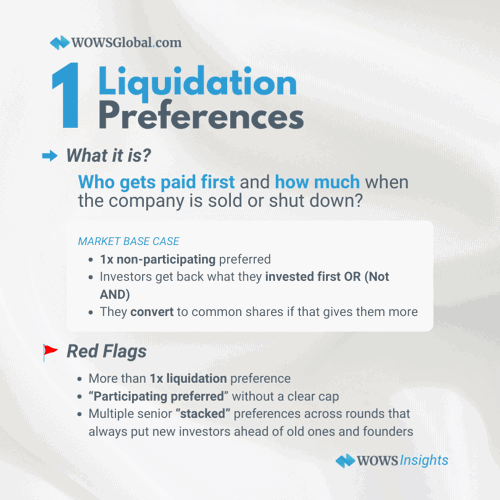
Liquidation Preferences
What it means: When your company is sold, who gets paid first.
The normal deal: Investors get their money back first (1x) or convert to common if that gives them more.
Red flags: Investors getting more than 1x, or deals where they get paid twice (“participating preferred”). This is where founders often lose millions without realizing why.
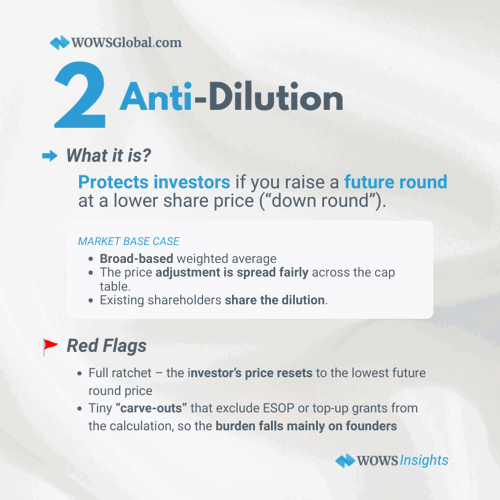
Anti-Dilution
What it means: If your next round is at a lower price, investors don’t want to take the full hit.
The normal deal: Everyone shares the pain a bit (weighted average).
Red flag: Full ratchet, which basically resets their price to the lowest price you ever raise at. It punishes founders and early believers and can scare off future investors.
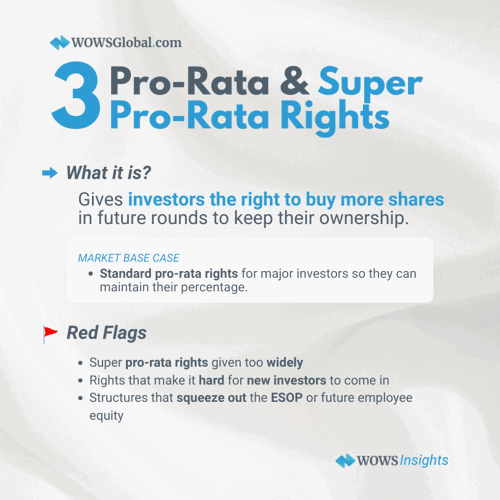
Pro-Rata Rights
What it means: Current investors get first dibs on buying more in your next round.
The normal deal: Big investors get standard pro-rata.
Red flag: Super pro-rata, which lets early investors hog the next round and blocks new capital from joining.
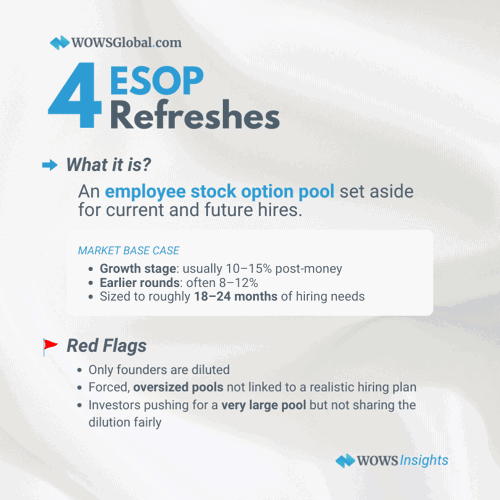
ESOP (Employee Options)
What it means: The pool of equity you set aside for future hires.
The normal deal: 10–15% depending on stage.
Red flag: When investors force the ESOP “pre-money,” meaning you take the dilution, not them. Also: oversized pools not based on any hiring plan.
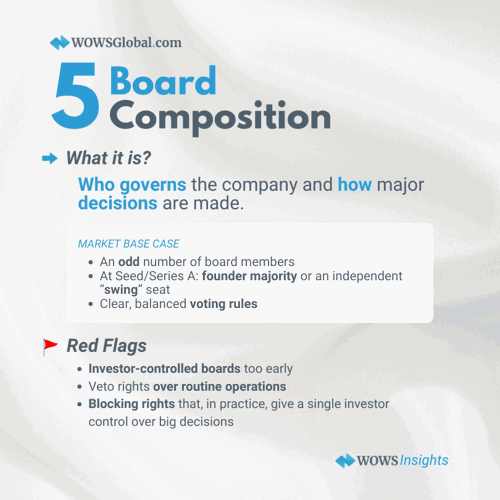
Board Seats
What it means: Who gets to vote on big decisions.
The normal deal: Small boards with either founder control or an independent swing vote.
Red flag: Giving an investor control too early, it makes future fundraising harder and slows you down.
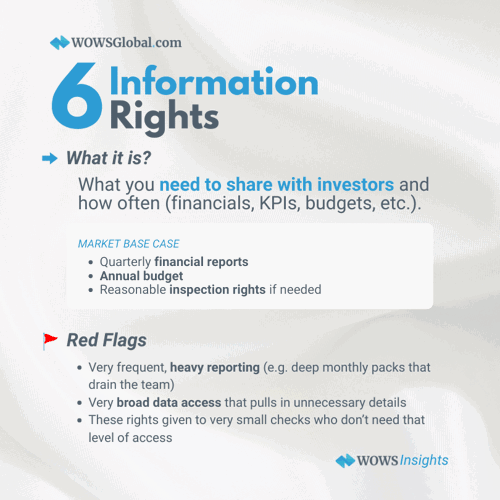
Information Rights
What it means: What you have to report and when.
The normal deal: Quarterly financials, yearly budget, occasional check-ins.
Red flag: Monthly “deep dives” or data requests from small checks. It burns time and distracts the team.
2. How to Negotiate Without Drama
Do this
-
Start from what's normal. “1x non-participating, weighted average anti-dilution, standard pro-rata, reasonable ESOP, and a small board” is a totally normal request.
-
Trade, don’t surrender. If they want something heavy (like participation), ask for something lighter (like better board terms or capped participation).
-
Use simple math. Show them how the terms affect outcomes at different exit values. People calm down when they see the numbers.
-
Think about your next round. Don’t accept terms that make the next investor walk away.
Avoid this
-
Don’t chase the highest valuation if the structure is ugly. Structure costs more than dilution. Every founder learns this the hard way once.
-
Don’t give broad veto rights. Limit vetoes to big stuff: M&A, new debt, new share classes.
-
Don’t let reporting become a full-time job. Set a rhythm and stick to it.
-
Don’t delay ESOP fixes. If you don’t do it now, you’ll end up doing it mid-round under worse pressure.
3. Quick Scenarios (Founder-Friendly)
Scenario A: Seed Round
Investor wants participating preferred.
Your move:
“No problem considering structure, but can we keep it simple with 1x non-participating? Happy to give you a board observer seat and solid KPI updates instead.”
You look reasonable. You avoid a painful clause. Win-win.
Scenario B: Two Competing Series A Offers
One investor gives a higher valuation but wants board control + super pro-rata.
Another gives a slightly lower valuation but clean terms.
Take the clean one.
You keep flexibility for Series B and avoid governance headaches.
Scenario C: Down Round
New investor asks for full ratchet.
Your move:
Offer weighted average instead + a small performance-based warrant if they need more upside.
Protect yourself and protect early investors.
4. Fast Red Flag Checklist
❌ Anything above 1x liquidation
❌ Participating preferred with no cap
❌ Full ratchet
❌ Super pro-rata
❌ Investor-controlled boards at early stages
❌ Vetoes on normal operational decisions
❌ Monthly reporting for small checks
❌ ESOP refreshes that dilute founders only
Pin this list to your laptop.
5. Final Advice for Founders in 2025
-
Simple beats clever. Clean terms make your next round easier.
-
Independents help keep the peace. Great for tie-breaking and optics.
-
Math wins arguments. Show outcomes, don’t debate feelings.
-
Get support early. A one-hour review saves months of headaches.
If you’re comparing offers or planning a raise, WOWS Global can help you review terms, model outcomes, and negotiate cleaner deals.
If you’re weighing term sheets or anticipating a raise, WOWS Global can help with fundraising advisory and term-sheet review, from structure modeling to negotiation strategy, so you close on clean, future-proof terms. Connect with WOWS Global by scheduling a call using this link.

Related Posts
-

Term Sheet Startup Funding Venture Capital 6 Minutes
Term Sheet 101, 2026 Edition: Clauses, Red Flags and Negotiation Tactics
A practical guide to negotiating startup term sheets, covering valuation, dilution, liquidation preferences, board control, investor rights and key red flags. -

SEA Startup & Venture Capital Proptech Media 4 Minutes
Catcha Group: Company-builders Powering SEA’s Internet Plays
Catcha Group has spent two decades building and backing Southeast Asia’s internet champions, from classifieds and OTT to flexible workspaces. With hands-on operating support and smart consolidation plays, the firm has turned category leaders into headline exits. -
Biotech AI SEA Startup & Venture Capital deep-tech 6 Minutes
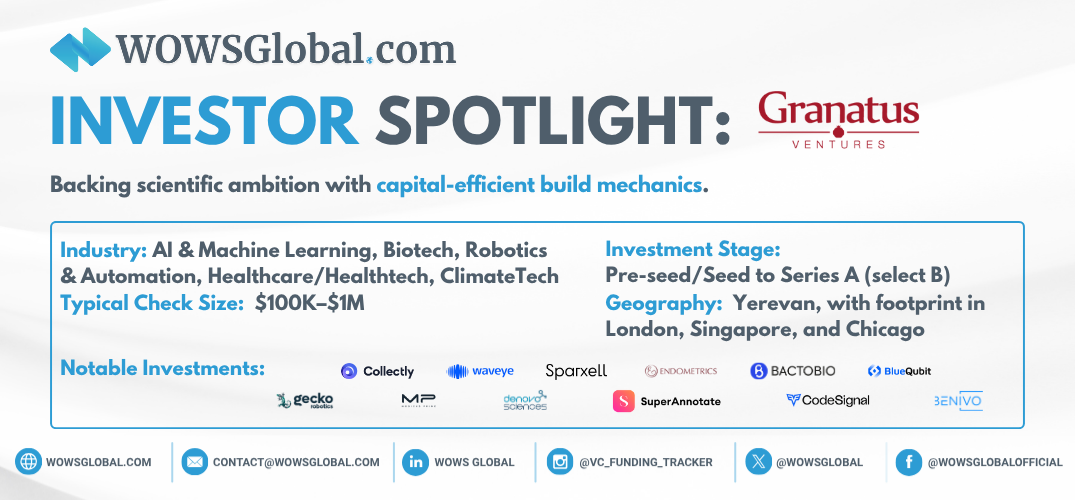
Granatus Ventures: Deep-Tech Builders Bridging Armenia and Southeast Asia
Granatus Ventures backs IP-rich startups in AI, biotech, robotics, and advanced/quantum computing, pairing early checks with an Armenia engineering engine and a Singapore touchpoint for SEA pilots. Learn how their SDG-aligned thesis translates into practical capital and deep technical diligence. -
Invest in Startups Startup & Venture Capital SAFE ESOP 4 Minutes
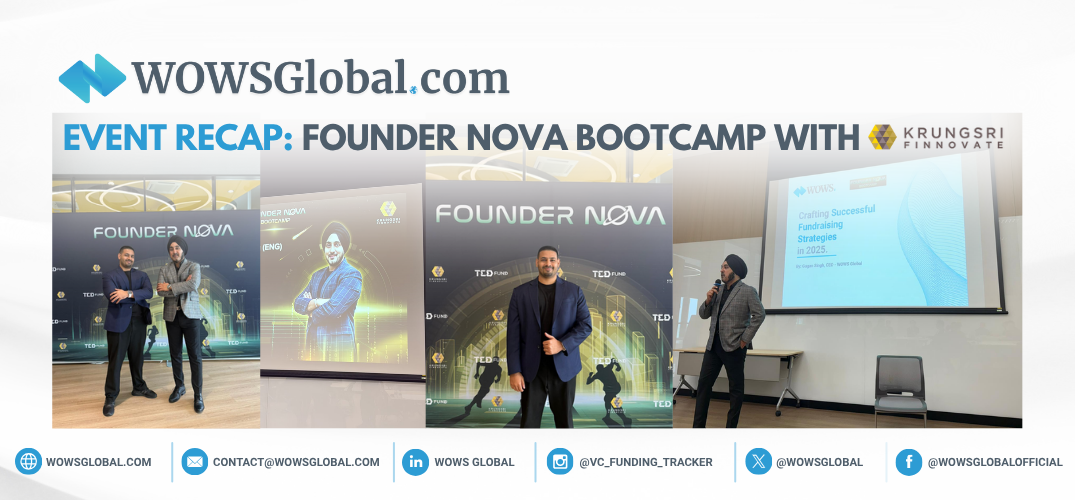
Event Recap: Founder Nova Bootcamp with Krungsri Finnovate
A practical recap of Founder Nova Bootcamp with Krungsri Finnovate, what founders learned about SAFEs, cap tables, and term sheets, and how to raise smarter in today’s market. -

Startup & Venture Capital Early Startups Founder Investment 3 Minutes
How to Choose Which Startup to Invest In
Choosing a startup isn’t a coin toss. This quick-read playbook covers market sizing, founder fit, unit economics, risk mapping, and terms, written in a toned-down sports recap style. Wrap up with “WOWS Insight,” where WOWS Global explains how it matches investors with companies that fit their thesis, stage, and traction. -
MENA SEA Startup & Venture Capital Investment 6 Minutes
Investment Highlights for the month of October: MENA & SEA keep the deal-flow humming
From Riyadh to Singapore, October delivered steady financings across AI enterprise, fintech rails, and asset-heavy platforms. Our report breaks down the biggest rounds, why structured capital is rising, and exactly who’s writing the checks, plus WOWS’ take on what it means for founders.